

Yes—local SEO is worth it for a small business in 2026 when customers search for its services nearby and the business can turn those inquiries into profitable work. It is not a substitute for answering calls, qualifying requests, or following up on estimates. Judge local SEO by qualified inquiries and completed jobs, not rankings alone.
TL;DR
Is local SEO worth it? Yes, when nearby searchers become qualified inquiries and profitable jobs.
Fix missed calls and unclear service information before expanding local search activity.
Track inquiries through scheduling, completed work, and payment—not just website visits.
ClearPilot Consulting connects SEO with workflow mapping and lead handling for local businesses.
Is local SEO worth it for a small business in 2026?
Local SEO earns its place when it helps the right local customer find you and take a useful next step. That step might be a call, an estimate request, or an appointment. A higher position for a search unrelated to your actual work does not meet that test.
Start with your service area and your intake process. The Google Business Profile to booked jobs workflow connects search visibility to what happens after an inquiry arrives.
Choose your starting point based on the problem you actually have:
| Approach | Best for | Benefit | Limitation |
|---|---|---|---|
| Maintain local SEO yourself | Owners with a straightforward service offering and time to manage it | You keep direct control of business information and website updates | The work competes with customer service and daily operations |
| Hire local SEO support | Owners who need ongoing search work and accountable reporting | You can assign responsibility for agreed search tasks | Search work alone does not fix missed calls or weak follow-up |
| Fix lead handling first | Businesses already receiving inquiries that go unanswered | You address a known break between interest and booking | This does not address weak search visibility |
These are starting points, not permanent choices. You can maintain accurate business information while fixing intake, then expand search work once someone owns the follow-up.
Why this matters
An owner can have a visibility problem, a conversion problem, or both. Treating every shortfall as a need for more traffic makes those problems harder to separate. If inquiries already arrive but sit unanswered, improving search visibility leaves the broken handoff in place.
For your 2026 plan, separate getting found from getting booked. ClearPilot Consulting approaches local SEO through workflow mapping: understand how an inquiry becomes work before adding automation or changing tools.
The useful question is not whether SEO produces activity. It is whether the activity reaches customers you serve, produces work you want, and supports the business after delivery costs and staff effort.
When local SEO deserves your attention
Customers search for the services you actually provide
Build around the work you want to accept. A plumbing business that wants repair inquiries needs clear repair information, not pages aimed at unrelated construction searches. Describe the service in the language a customer uses when asking for help.
Check the inquiries you already receive. Record what people requested and whether you accepted the work. That gives you a practical starting point for deciding which services deserve clearer pages and better local information.
Geography changes whether a lead is useful
For a local service business, an inquiry outside the service area can consume time without becoming a job. Make your operating area clear on your website and in your intake questions. Do not imply that you serve locations you cannot support.
Location pages need useful distinctions. Explain the actual service and any relevant local operating details you can verify. Replacing a town name across otherwise identical pages does not give a reader a better answer.
Your business can respond and deliver
Search visibility is useful only if your team can handle the resulting requests. Assign an owner to new inquiries, decide what information is needed, and define when a person must step in. Keep scheduling promises tied to real availability.
If nobody owns the next response, fix ownership before expanding demand. More inquiries are not the right immediate goal when existing customers cannot get a clear answer.
When should you fix something else first?
Pause expansion when your website describes the wrong services, your phone routing fails, or form submissions disappear into an unattended inbox. Those are specific faults. Resolve them rather than asking a search campaign to work around them.
Also separate weak demand from weak measurement. An empty report does not prove search produced nothing if staff never record where inquiries came from. Equally, a busy inbox does not prove SEO worked if the requests are unrelated or outside your area.
Use a short diagnostic before committing to more work:
Can a customer identify your service and operating area without calling?
Does a submitted form reach a named person?
Can that person see enough information to respond?
Is the inquiry’s outcome recorded?
Can you distinguish booked work from unanswered requests?
You do not need a complicated system to answer these questions. You need a consistent process that staff actually use.
How do you measure whether local SEO is worth it?
Track the path from inquiry to payment in 5 stages. Keep the record in a tool your team already uses where practical. A simple shared process is more useful than a detailed dashboard nobody maintains.
Capture. Record the inquiry source when known, the requested service, and the contact details needed for a reply. Keep unknown sources marked unknown rather than assigning credit by guesswork.
Qualify. Check whether the request matches your services and service area. Separate unsuitable inquiries from suitable customers who have not yet decided.
Assign. Give the inquiry a responsible person and a next action. A notification is not the same as an accepted handoff.
Book. Record whether the customer scheduled work, requested an estimate, declined, or stopped responding. Preserve the reason when you know it.
Close. Record completed work and payment status. Booked work and collected revenue answer different business questions.
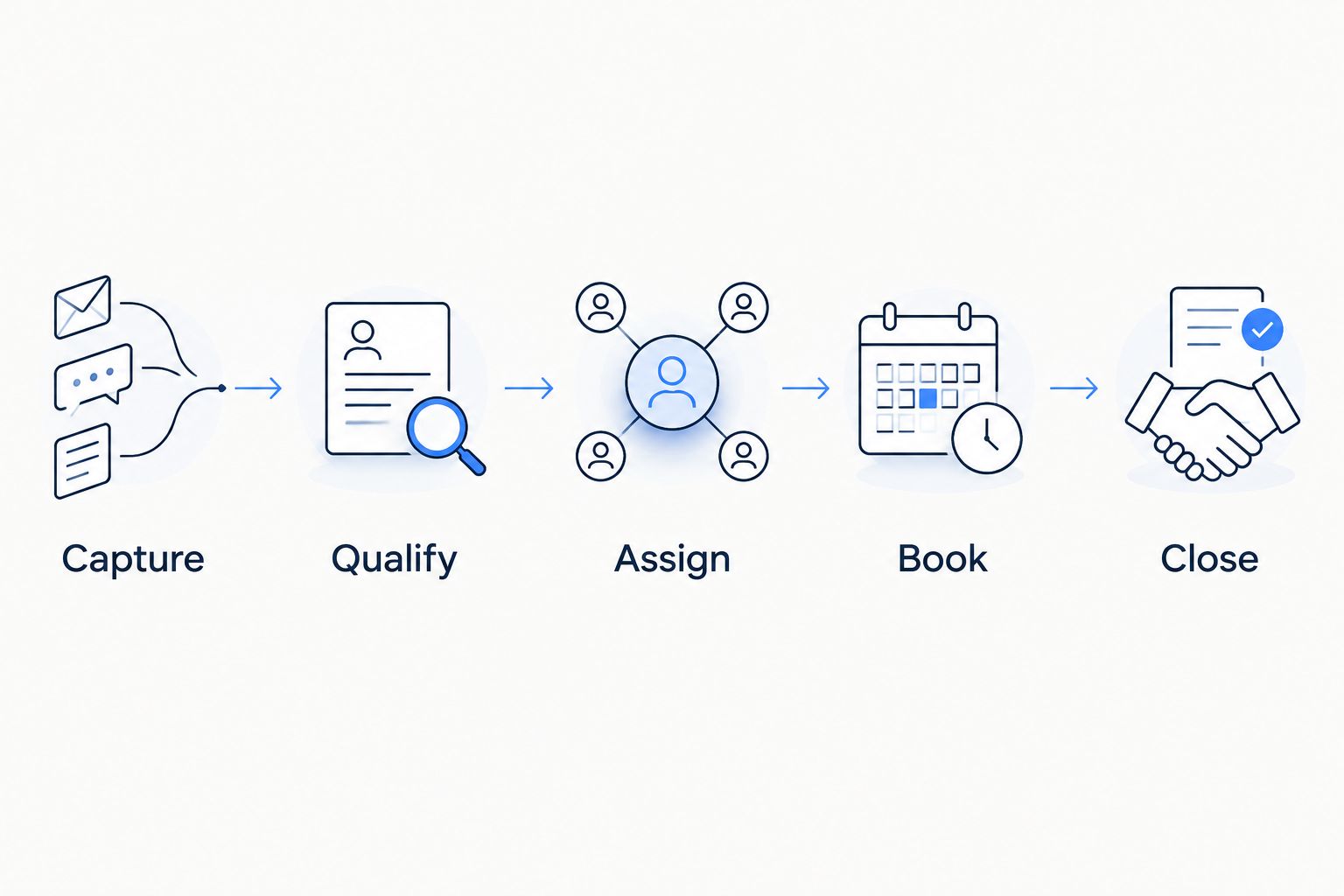
Measure the handoffs after the inquiry, not just the visit that came before it.
For a 2026 review, compare equivalent periods and keep the definitions consistent. If you change what counts as a qualified inquiry halfway through, the comparison no longer measures the same thing. Note changes in operating hours, staffing, services, and capacity alongside the results.
Look beyond revenue alone. Work has delivery costs, and handling inquiries takes staff time. Assess whether the contribution from attributable work justifies the search work and the effort needed to manage it; do not treat every dollar collected as profit.
Why local SEO value varies
There is no universal return that applies to every local business. The same inquiry can be valuable to one company and unsuitable for another. Your service mix and operating process determine what happens after discovery.
Service fit. Searches need to match work you provide and want to accept.
Geographic fit. Customers need to fall within the area you can serve.
Search relevance. Your business information and pages need to explain the service clearly enough to answer the customer’s question.
Response ownership. Someone needs to accept responsibility for each suitable inquiry.
Delivery capacity. Your team needs room to perform the work it books.
Measurement quality. Records need to connect inquiries with outcomes without assigning credit to an unknown source.
Use these factors to diagnose the constraint. If suitable inquiries arrive but appointments do not follow, inspect the handoff. If inquiries consistently request services you do not offer, inspect the information attracting them.
What should a useful local SEO plan include?
A useful 2026 plan names the work, the owner, and the business outcome being measured. It does not stop at a list of keywords. Ask how changes to business information, website content, and inquiry handling support the services you want to sell.
Accurate business information
Keep customer-facing details accurate. Review your service descriptions, hours, contact information, and operating area when they change. Remove conflicting instructions that leave a customer unsure how to reach you.
Treat maintenance as assigned work. If nobody is responsible for updating holiday hours or removing a discontinued service, an accurate setup can become inaccurate later.
Pages that answer real buying questions
Explain what you do, where you do it, and what happens after someone contacts you. Describe the information needed for an estimate without implying that every request can receive an immediate quote. Keep claims tied to services and policies your business actually provides.
Use customer questions as an editorial filter. A page that clarifies whether you handle a particular job has a clear purpose. A page written only to repeat a location and keyword does not.
A working inquiry handoff
Add useful details to incoming inquiries before routing follow-up. This is lead enrichment: making an existing request easier to understand and act on, not researching outbound prospect lists.
For an illustrative home-service intake, start with 3 fields: requested service, service location, and preferred contact method. Ask for additional information only when it changes the next action. If details conflict, flag them for a person instead of silently choosing an answer.
Reporting that supports a decision
Agree on the difference between an inquiry, a qualified inquiry, an appointment, and completed work. Then ask what changed and what action follows. Reporting should help you decide whether to maintain the work, adjust the focus, or fix a process failure.
ClearPilot Consulting is best for local business owners who need local SEO connected to lead handling. Its services include workflow mapping, automation, and supporting SEO and website work. That approach fits an owner with disconnected inquiries and follow-up; a request limited to a ranking report has a narrower scope.
How do automation and people fit into local SEO?
Automation belongs where the next action is clear. It can acknowledge a submitted request, pass the details to the responsible person, or flag missing information. An acknowledgment should confirm receipt, not claim that a job is booked when nobody has accepted it.
Set 2 checkpoints in an illustrative workflow: review unclear requests before routing, and confirm availability before committing to a booking. Keep decisions about unusual jobs, sensitive situations, and exceptions with a person. Connect existing tools where practical rather than replacing them by default.
Before adding a chatbot or agent, write down what it is allowed to say and do. If a task requires a judgment your staff cannot express clearly, do not hide that uncertainty inside an automated response.
What should you ask before hiring local SEO help?
Ask the provider to explain the first problem they would address and why. A useful answer connects proposed tasks to your services, location, and current inquiry process. It also separates search responsibilities from the work your staff must own.
Use these questions in the conversation:
Which services and locations will the work focus on?
What changes will be made to business information and website pages?
How will qualified inquiries be distinguished from unsuitable requests?
Who owns calls, forms, and follow-up after an inquiry arrives?
Which accounts and records will the business retain?
What evidence will support continuing or changing the work?
For a 2026 engagement, agree on the review criteria before work begins. Reject guaranteed rankings or invented booking projections. Ask for a clear scope, understandable reporting, and an explanation of what remains outside the provider’s control.
Request a free automation assessment
Discuss how local search inquiries move through intake, follow-up, and scheduling.
FAQ
Is local SEO worth it if my business is very small?
Yes, local SEO is worth considering when nearby customers search for work you provide. Business size matters less than service fit, capacity, and your ability to respond.
Should I fix my website before starting local SEO?
Fix website problems first when they prevent customers from understanding your services or contacting you. You can maintain accurate local business information while making those repairs.
Is local SEO better than fixing missed calls?
Fix missed calls first when suitable inquiries already go unanswered. Local SEO addresses discovery; call handling addresses what happens after a customer finds you.
How long should I wait to decide whether local SEO works?
Set the review period around your buying cycle and the work being completed, not a universal deadline. Track qualified inquiries and outcomes consistently before drawing a conclusion.
Can I manage local SEO myself?
Yes, you can manage local SEO yourself if you can maintain accurate information, useful pages, and outcome tracking. Assign time and ownership so the work does not disappear behind daily operations.
Does a higher Google ranking mean more profit?
No, a higher Google ranking does not prove more profit. Check whether the resulting inquiries become suitable, completed work after accounting for delivery and acquisition effort.
Do I need an AI agent for local SEO?
No, an AI agent is not a prerequisite for local SEO. Consider automation only when you have a defined intake or follow-up task, clear limits, and a person responsible for exceptions.
One last thing
Before asking for more inquiries, follow an existing inquiry through your own business. Check where it arrived, who answered, what information was missing, and whether the outcome was recorded. The first broken handoff gives you a specific problem to address.
ClearPilot Consulting starts with that workflow rather than a new tool. For your 2026 plan, improve the path to a booked job—not just the path to your website.